
The Idea
Customer approached Sembit in October 2021. One of their research teams was investigating augmented reality in the context of video meetings, which had become very popular during Covid. Working with their lead researcher, we narrowed down exactly what they wanted to test: simulating adjustments to a user's background such as replacing floors and walls, adding or removing individual objects, and an automatic “declutter” option, along with a shared whiteboard that could capture something drawn on a piece of paper and place it on screen automatically.
The Goal? Validate the Idea.
The goal was to support user testing to see whether these augmented reality features were worth developing further, giving them real-world feedback before committing to a direction.
What We Built? An Interactive Demo.
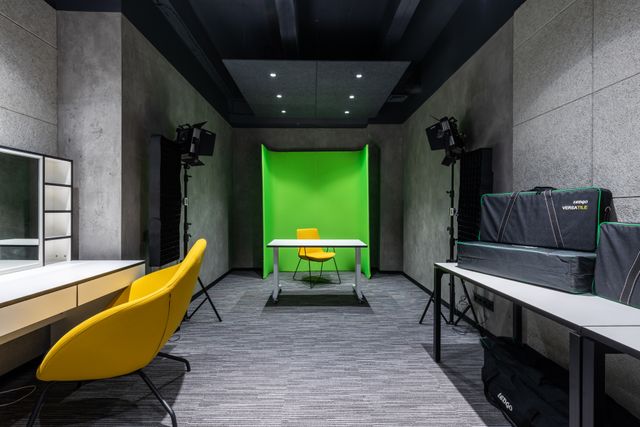
To make cleanly cutting the user's image out from the background doable in real time within a web browser, we provided the customer with a green screen background. We then created two web pages: one for the test subject, showing a video feed of themselves alongside a list of actions and additional background items combined with their video image in real time, and a control page for the person running the experiment, used to respond to the test subject's commands by updating the elements on screen. A simple server implementation synced state between the controller and the test subject.
In this way, the experimenters were free to simulate the effects of voice commands from the user as well as commands indicated by clicking particular buttons on their interface.
The Results? A Successful Experiment.
Customer ran their experiment successfully. They began with already-photographed props in the background, then had the test subject sit down, moved the green screen in behind them, and started the web page so their video appeared with those props put back into the image programmatically. The result was that the user felt like they were seeing the same room they had entered.
The augmented reality simulation let the user declutter their background, add other objects, and even include animated characters, and they could share a virtual whiteboard and add elements to that view. This proof of concept allowed the customer to determine how much, and in which direction, to invest in this type of AR technology.
Conclusion
The augmented reality demo shows how a focused, browser-based proof of concept can turn an open research question into actionable insight. By pairing a green screen setup with synced experimenter and test-subject web pages, Sembit gave the customer a hands-on way to evaluate AR features for video meetings and chart their next steps.